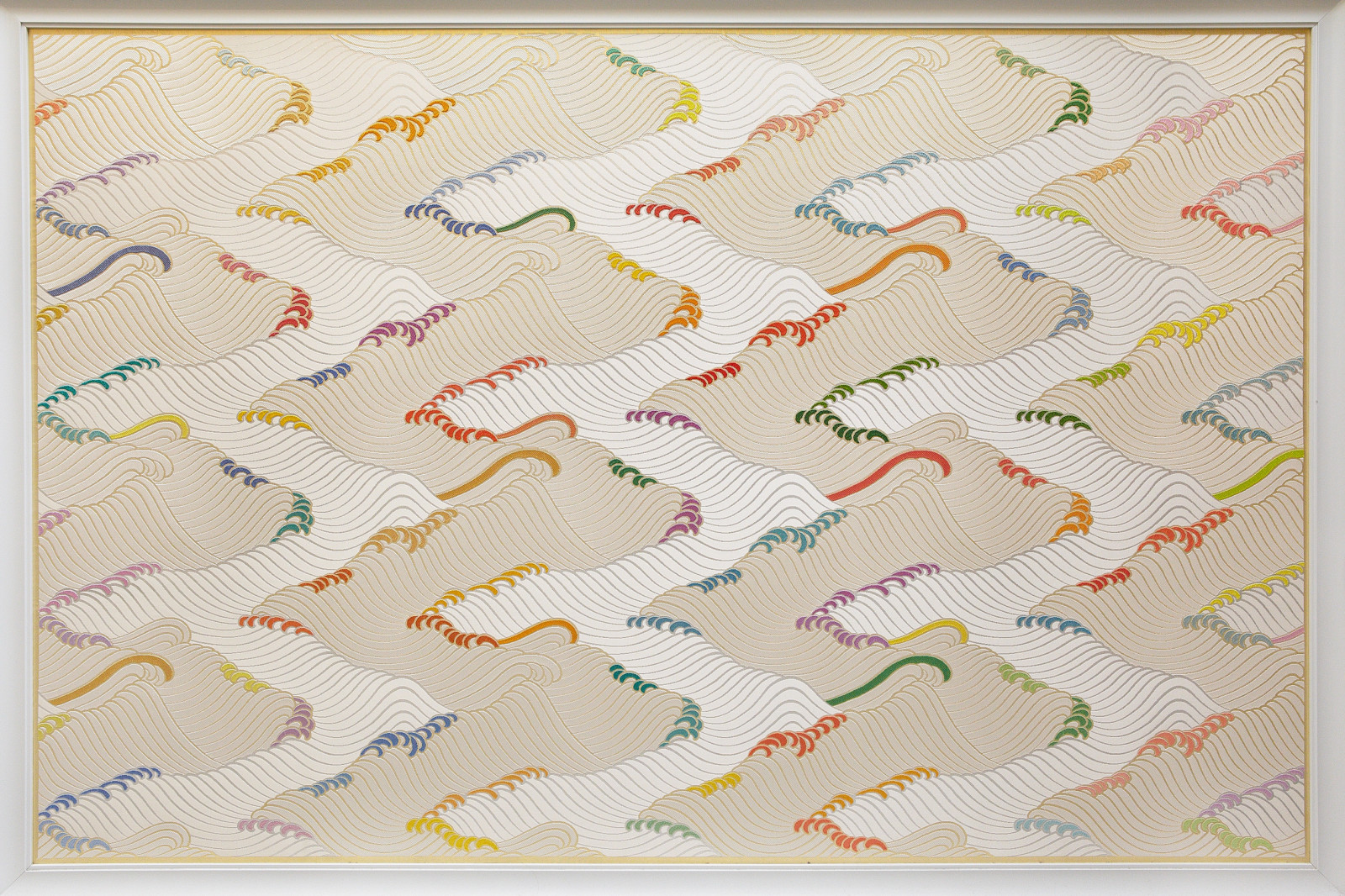
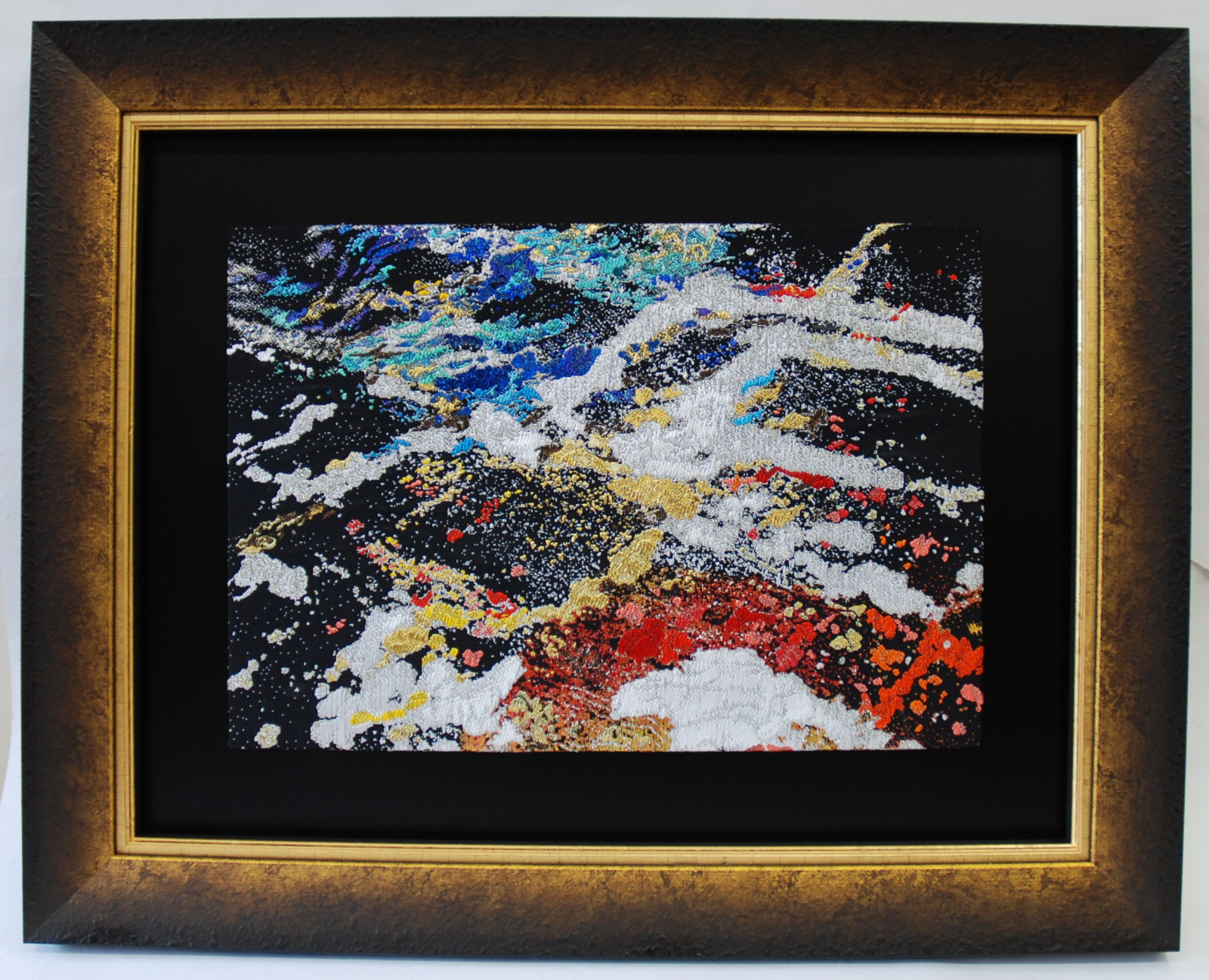
KOHO JAPANESE TRADITIONAL WEAVING
Please visit to the workshop tour and weaving experience.
Tourists, VIPs, corporate training, museums, tea ceremony, students,etc. are welcomed by many foreign customers, from children to seniors.
RESTORATION OF TEXTILE
We have been working on the restoration of textiles for four generations.
We are in the business of restoring textiles.
Please contact us.
JAPAN TRADITIONAL TEXTILE FOUNDATION
24 shimonogishi-cho shichiku kita-ku Kyoto,Japan
[Tel]075-491-9145
[Fax]075-493-8806
[e-mail] info@koho-nishiki.com
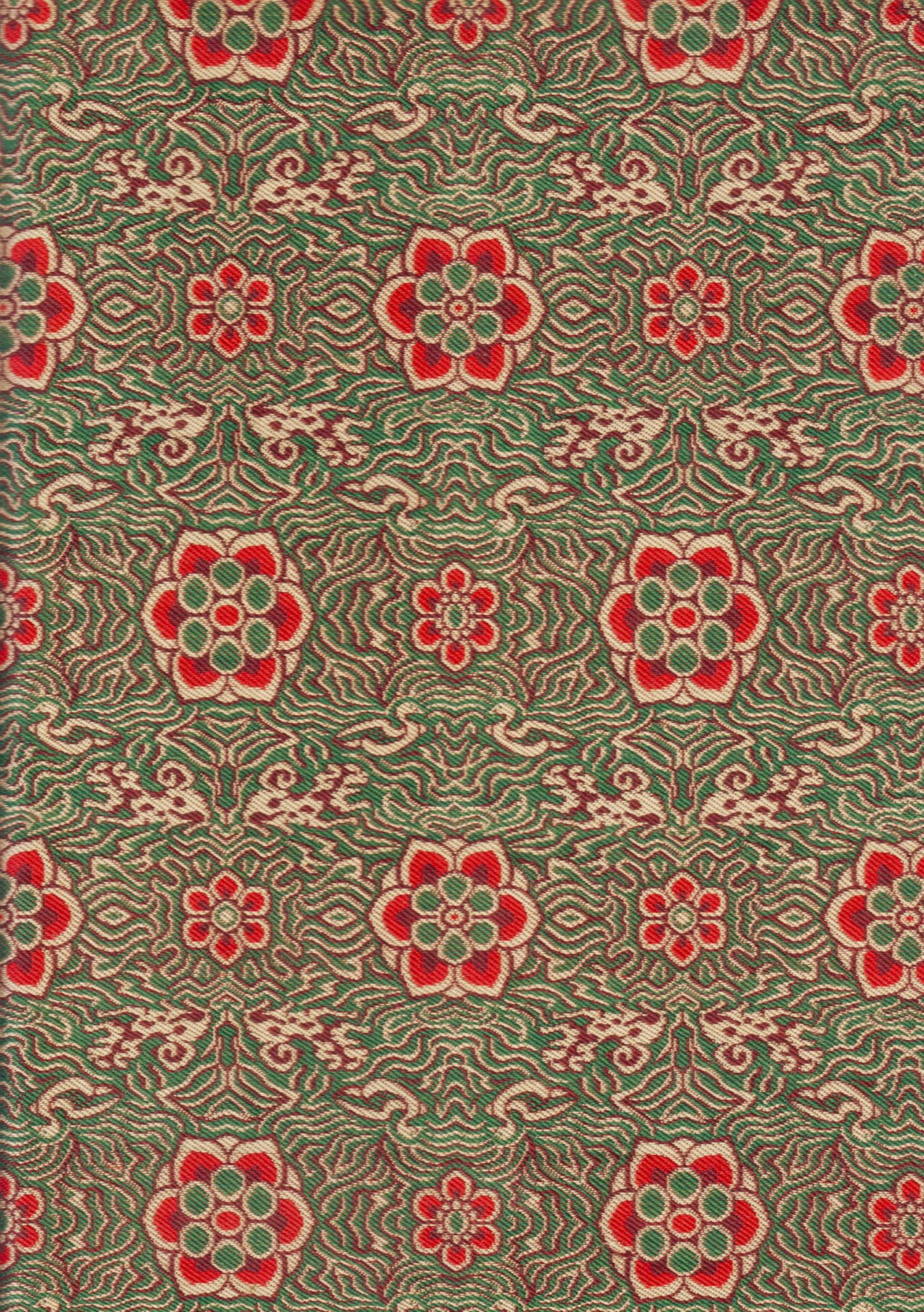
1.Brocade with Repetitive motif of flowers, Birds and Beasts on a green background
This is a reproduction of one of the ancient fabrics preserved in the Shoso-in Repository, Nara, a rare example of warp-patterned brocade. The original fabric is known to have been employed in banners used for the first anniversary of Emperor Shomu’s death in 757 (the original pieces are now owned by the National Museums in Tokyo and Kyoto).
It has a very elaborate and sophisticated design of a repetitive pattern with each unit consisting of two parts. One part has a Chinese-style flower in the center, above which are a pair of beasts and, further up, a pair of water birds floating on a wave. The other part consists of a smaller flower and some fruit, seemingly a pomegranate. The design was presumably derived from a typical Mesopotamian motif called “A pair of beasts under the Tree of Life.” This makes us think that, in fact, very little has changed in the history of design. As expressed in the phrase “permanence and impermanence,” changes are made at the design level only, not to the patterns themselves.
The whole composition consists of concentric circles in a hexagonal shape, but it cannot be called merely abstract. This design goes far beyond the rigid modern definitions of abstract or representational. Also, because all of the white flowing lines are edged with ancient purple dyes, and the delineating lines are somewhat soft, this excellent example of classic fabric conveys an elegant Japanese atmosphere.
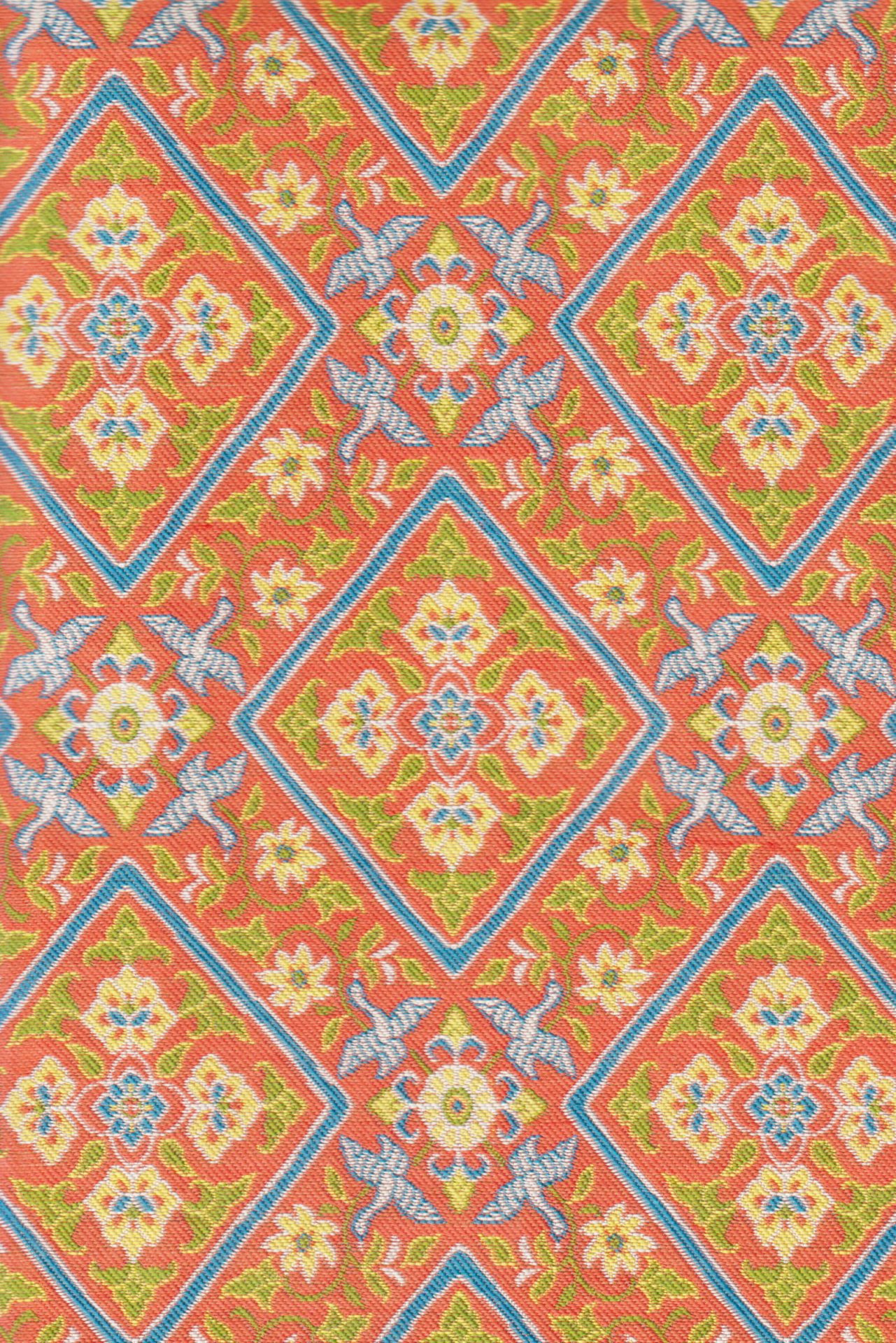
2.Brocade with Motif of Flowers and Birds in a Diamond and Stripe Pattern on a Red Background
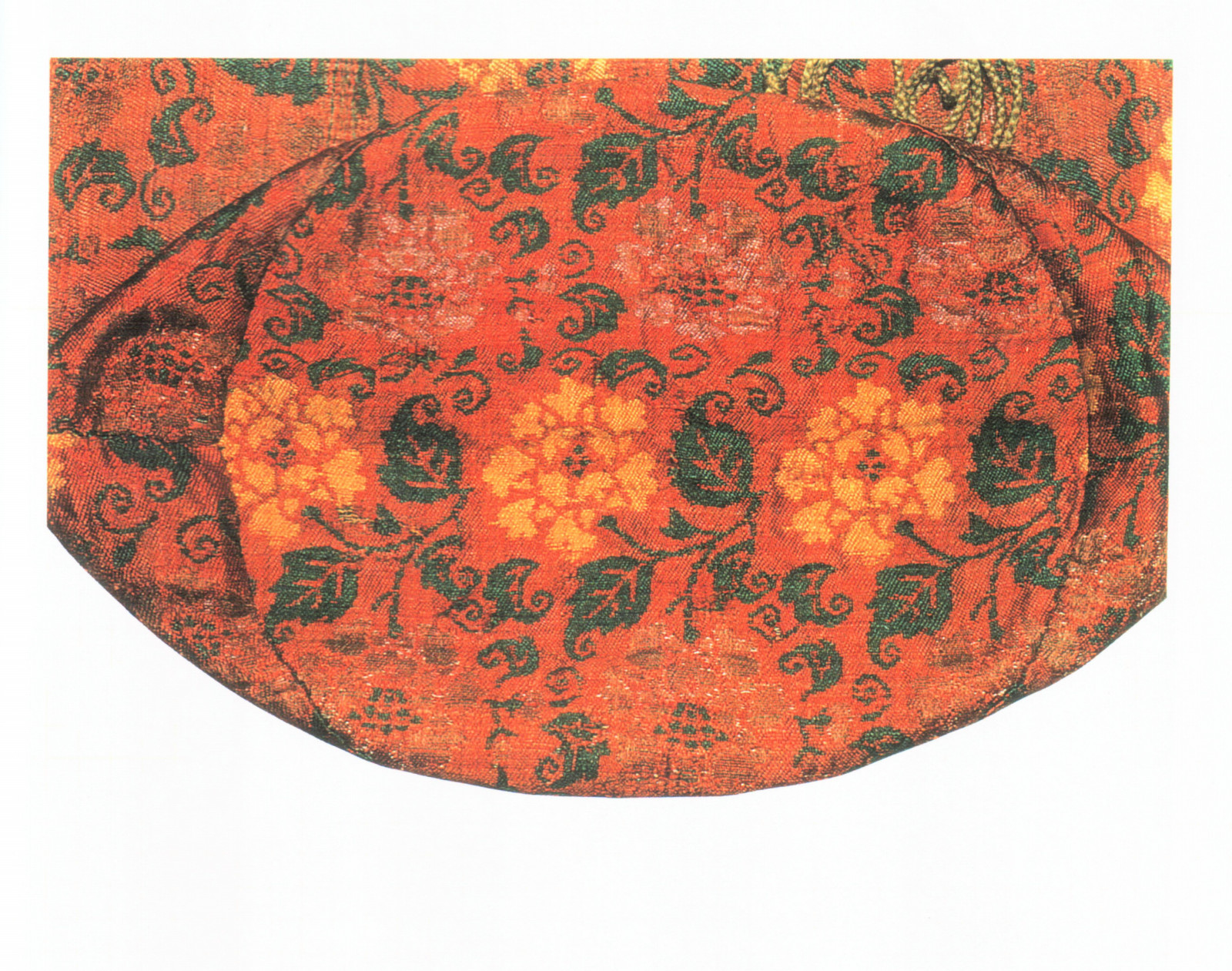
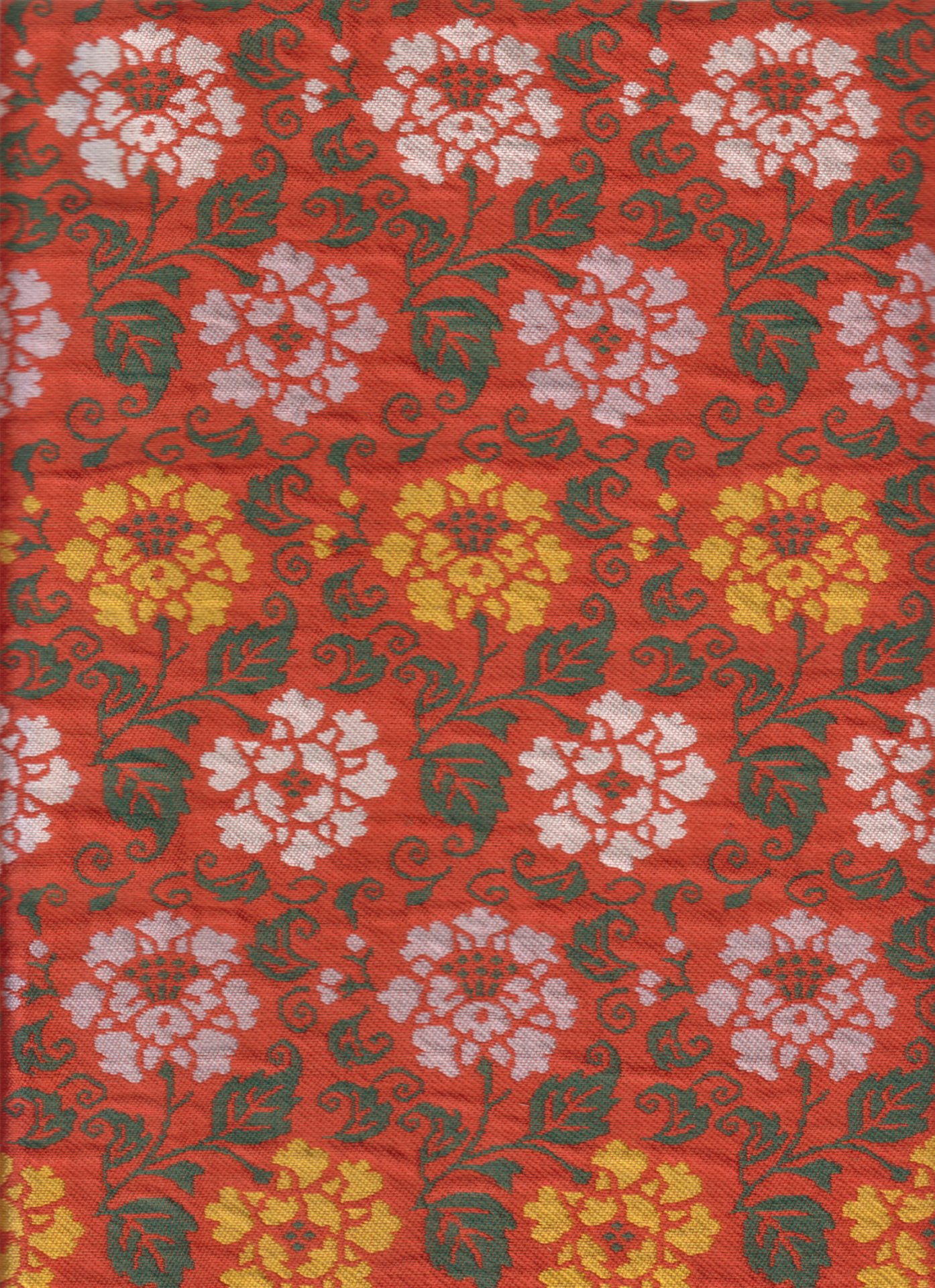
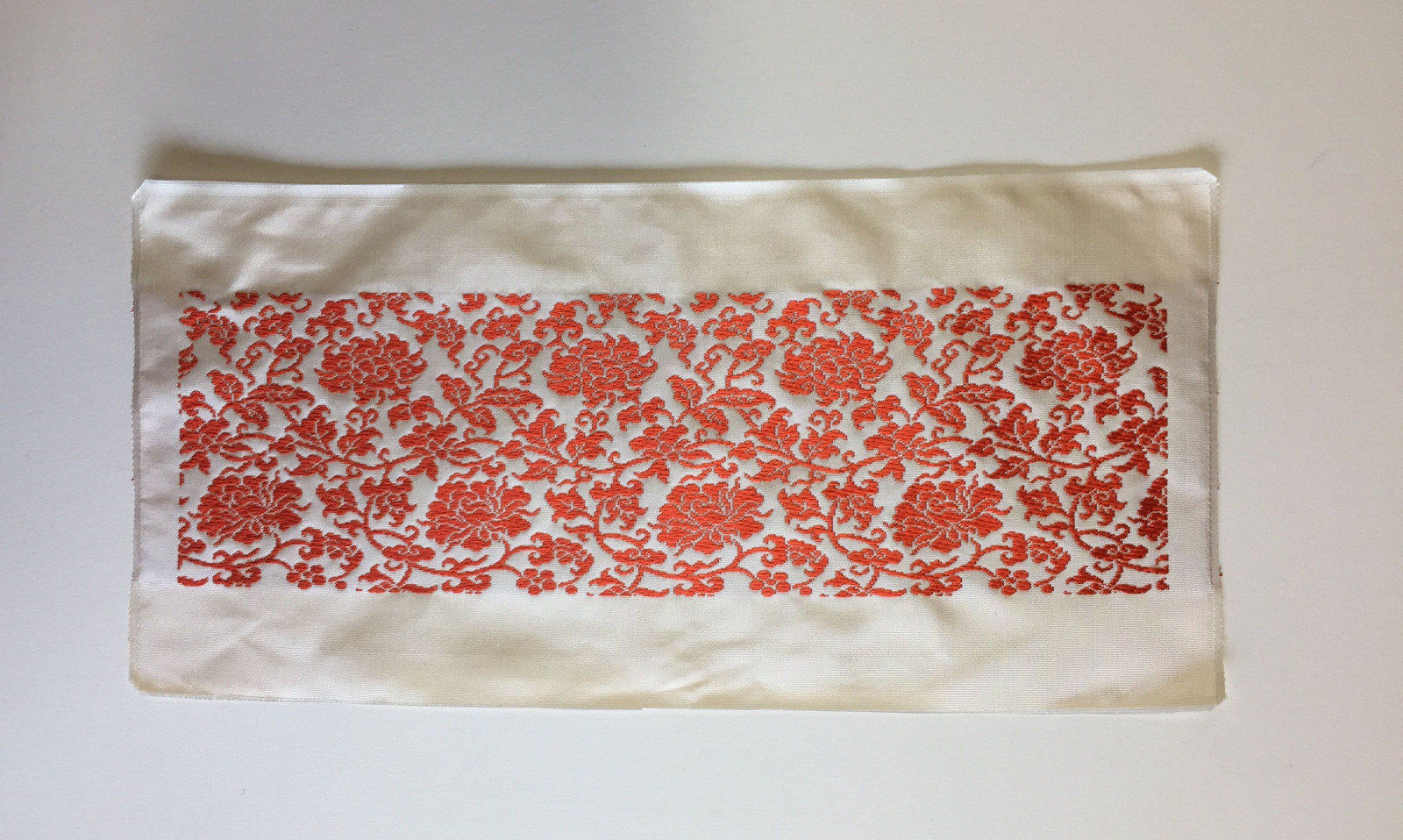
3.Brocade with Repetitive Motif of Peonies and Arabesque on a Red Background
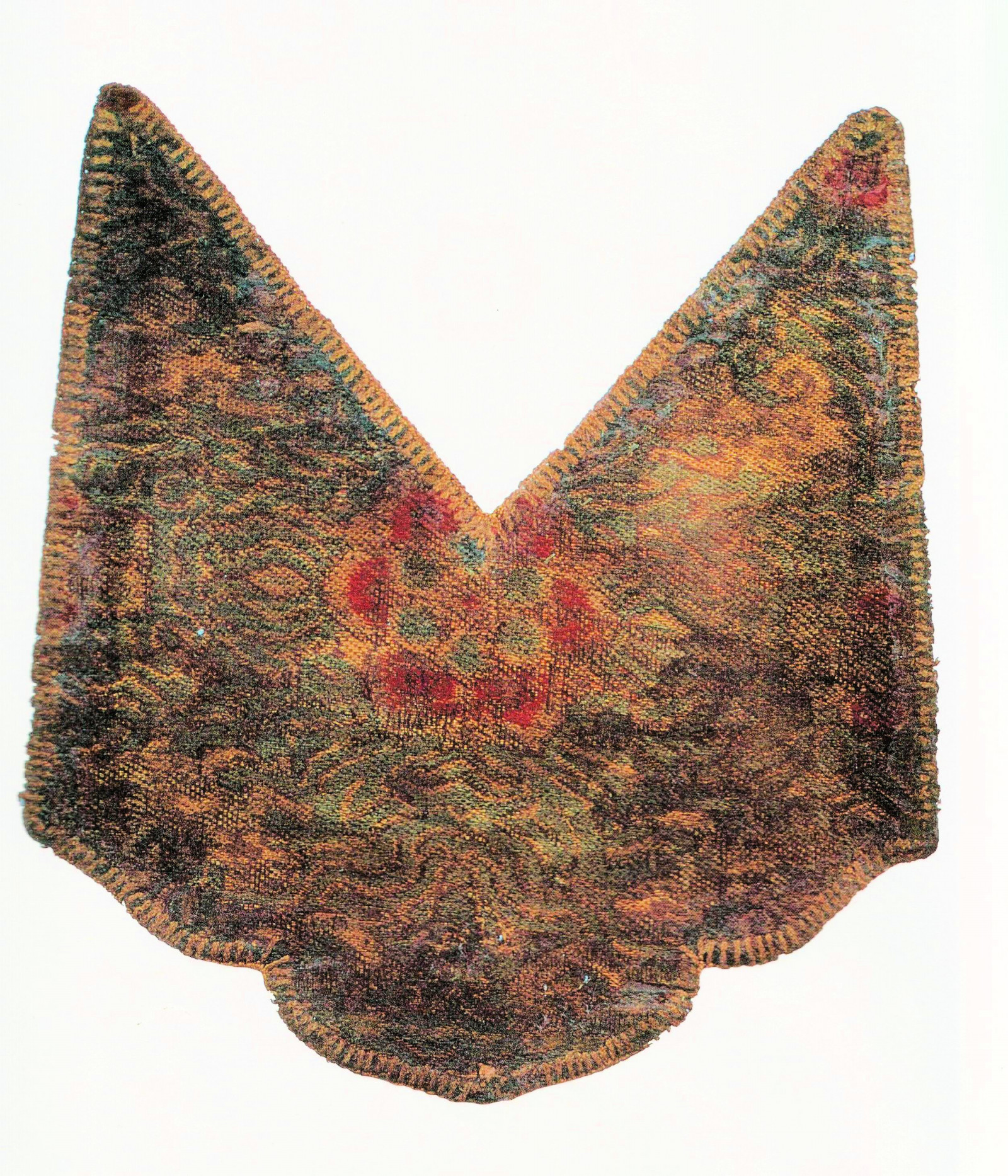
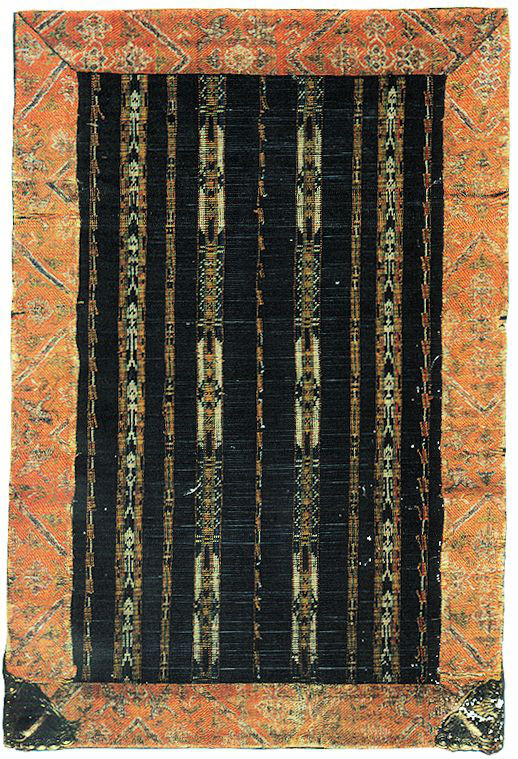
A number of ancient votive objects found both in the Kumano Hayatama Grand Shrine and Asuka Shrine, Wakayama, are considered to date from the Muromachi Period.
Among them is a three-faced mirror with a brocaded bag. It is thought that the mirror was wrapped in this fabric, “Brocade with Repetitive Motif of Peonies and Arabesque on a Red Background” and put in the mirror case. This fabric was designated a national treasure in 1955 and is presently stored in the Kyoto National Museum.
The brocade does not look any different from a double-sided twill of the Heian Period, but haha-date (ground warp) and shin-date (cord) that were used in the Heian Period became omote-date (warp yarn comprising the obverse side) and ura-date (warp yarn comprising the reverse side) respectively, making a fabric a figured double cloth. Various new techniques were employed in this brocade in the loom apparatus as well as in its design including: using a five-yarn group harness and the application of yellow, purple and white in turn for the horizontally repetitive two different kinds of peony patterns.
The Preservation and Succession of Traditional Technology
In response to the current critical situation facing the weaving industry, Koho established the “Japan Traditional Weaving Preservation Research Society.”
The purpose of the organization is the restoration of the traditional technology of yarn dyed figure cloth, as well as transmitting it to a new generation of artisans.
To accomplish this, we conduct research of extraordinary ancient weaving arts, achieve revival through restoration, and work together with weaving-related artisans to continue to pass on necessary production technology to the next generation.
This project, called the “comprehensive restoration project,” involves researching of all traditional technologies related to the production of ancient fabrics, as well ascarrying out their restoration.
From the hand processing of thread from silk cocoons to weaving equipment and tool making, we are creating woven fabrics using production techniques from former times, to the greatest extent possible.
Through this restoration project, we create jobs for artisans for whom job opportunities are currently decreasing, preserve technology, pass the technology on to the next generation and produce technical records for future reference.
What is Textile Restoration?
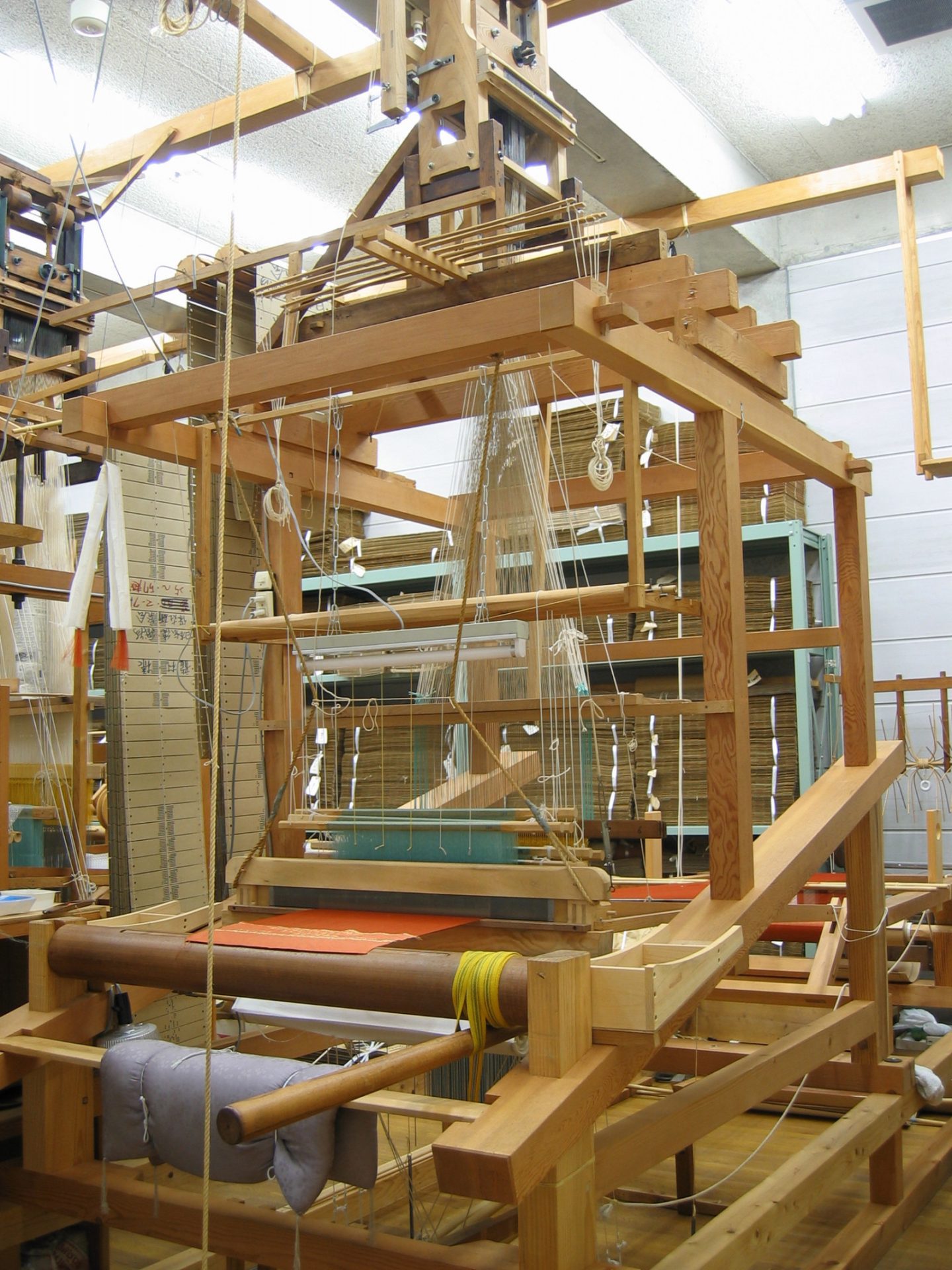
If we begin with a detailed analysis of the dyeing and weaving processes of ancient textile fragments, research the structure of the long-disappeared looms that wove those pieces, reproduce the looms, use production techniques that are original to the era in question as much as possible, dye yarn with the same kind of plants, and recreate the original conditions as much as possible, the result is then called “Textile Restoration.” A loom is not a versatile device that allows the weaving of many different kinds of fragments. On the contrary, one loom can only weave one kind of fragment. Because the make-up of the loom differs depending on the nature of the fragment, the structure of each loom has to designed by a process of conjecture, using the fragment to be produced as a reference. The reproduction of a loom to match each fragment is absolutely necessary.
Textile Restoration is to “Become Foolish”
“The philosophy behind textile restoration follows that even if there are 10,000 intersecting points of warp and weft threads, if those 10,000 points are correctly, completely and patiently examined, and if all is understood, restoration can be successfully achieved, “even if 1000 years have passed since its creation” said the first in our family line, Tatsumura Heizo I. In the process of making one piece of fabric, the number of intersecting points of warp and weft threads begins from 10,000 to several million points. To restore a piece of weaving, one first must become foolish. One must have the tenacity of a stubborn mule as well as wholehearted honesty and earnestness to accomplish this.
Comprehensive Restoration Project
The activity of a Japan Traditional Textile Foundation
About a comprehensive restoration project, from the hand processing of thread from silk cocoons to weaving equipment and tool making, we are creating woven fabrics using production techniques from former times, to the greatest extent possible.
Through this restoration project, we create jobs for artisans for whom job opportunities are currently decreasing, preserve technology, pass the technology on to the next generation and produce technical records for future reference.
SITE TOUR &Hands On Weaving Experience
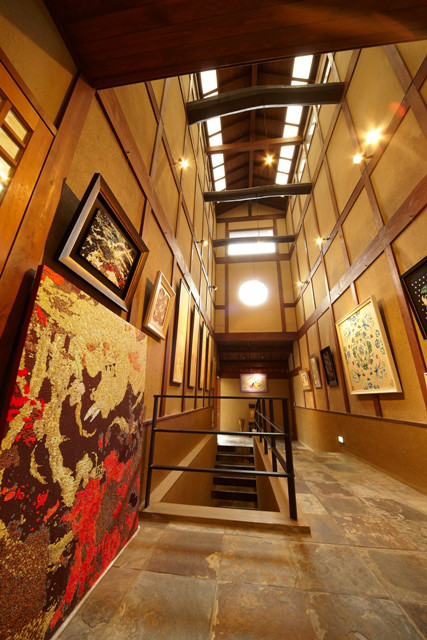
KOHO TRADITIONAL WEAVING WORKSHOP SITE TOUR
ancient weavings, recreated ancient tall looms, tapestries, etc.
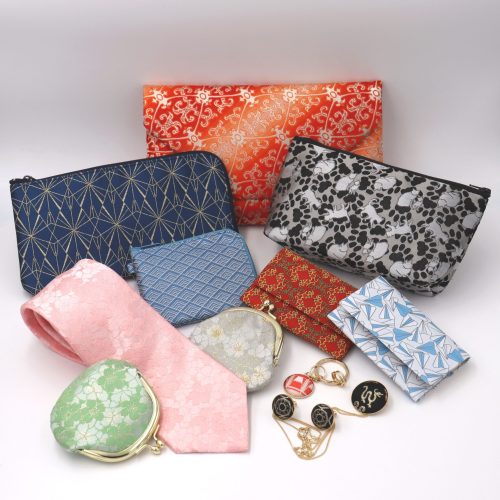
Tour six different rooms including our Woven Accessory Boutique.
Reservations required.
RESERVATIONS
• Required for any of the following: site tour, hands-on weaving session, boutique visit
• Make reservation requests by 5:00pm on weekdays
• e-mail: info@koho-nishiki.com
• Provide your name, desired visit date and time, number of adults, children,
nature of visit (tour and/or type of hands-on session )
[Entrance Fee]
Adults: ¥500/ person; Students: ¥300/person
Elementary school age or younger: no charge
Tour time: approx. 60-90 minutes
Maximum participants per tour: approx. 20 per tour
HANDS-ON WEAVING SESSION
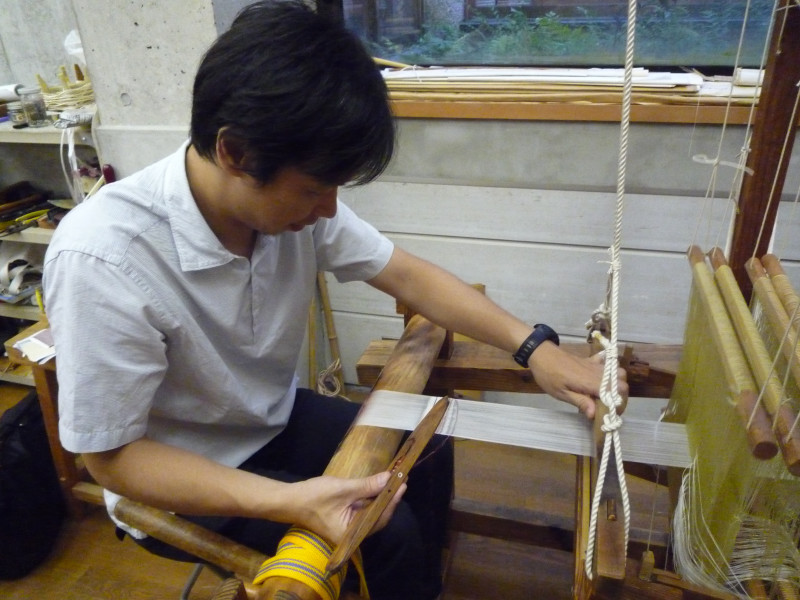
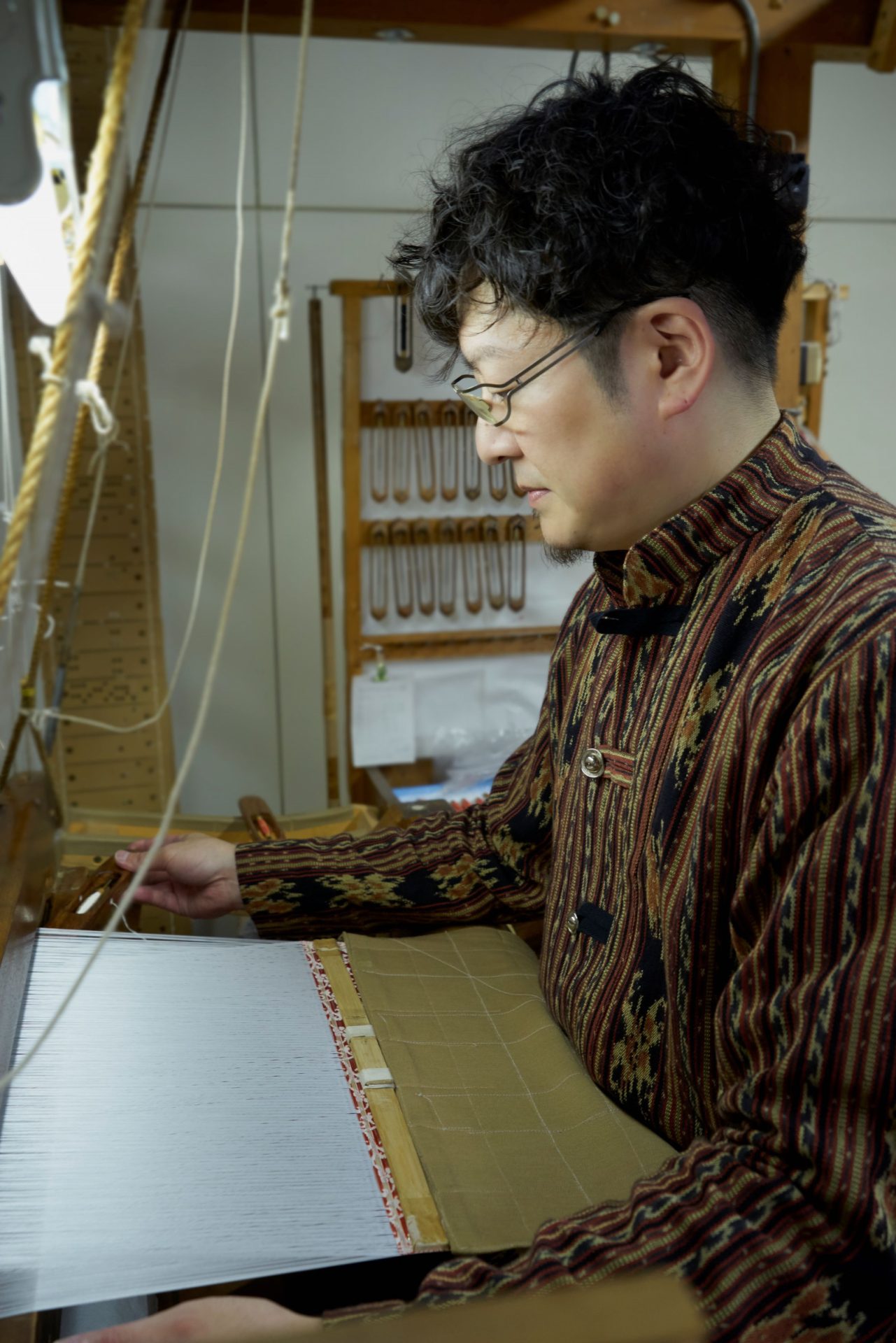
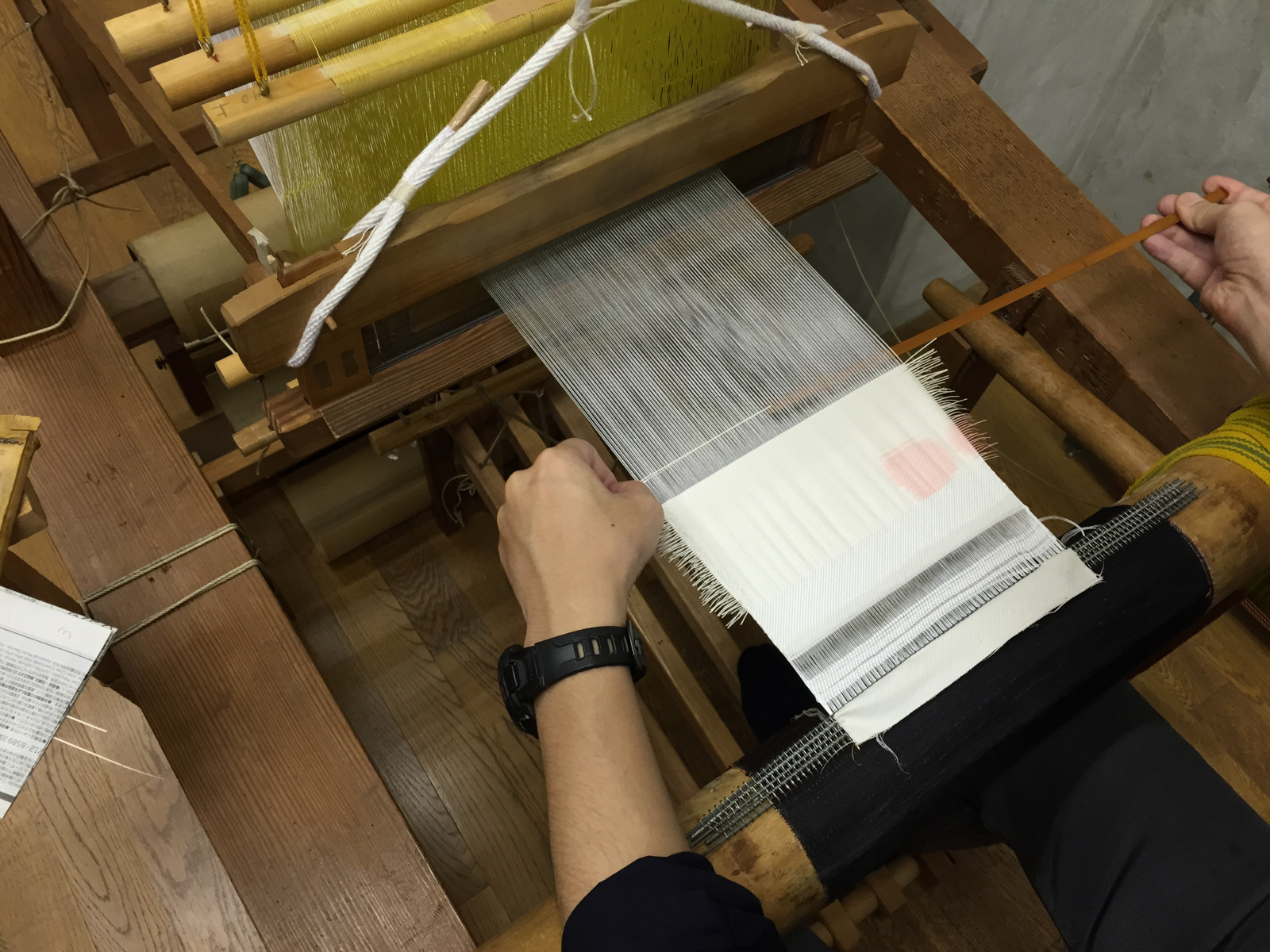
Experience weaving on a traditional hand loom
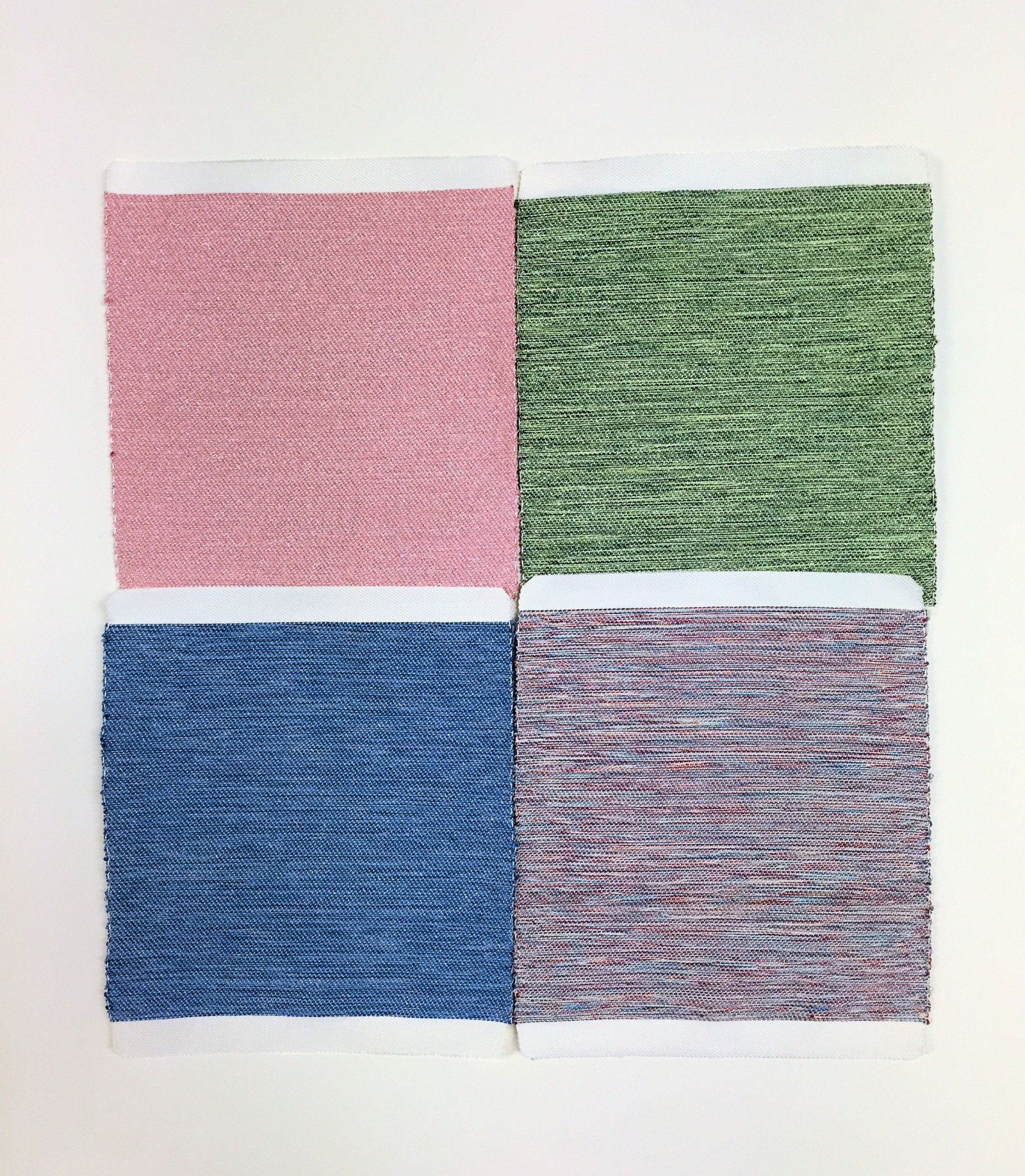
Weaving Session: Plain weave
Weave a single colored plain woven piece (10cm x 10cm)
which you may take home with you.
Fee: ¥1,500 + entrance fee
Minimum height requirement of participants: approx. 120cm
Maximum 2 participants per session
Session time: approx. 20 minutes (followed by 10 minutes preparation time by staff)
[Session flow]
Choose a thread color – receive weaving instructions – actual weaving time of 20 minutes – 10 minutes final preparation by staff
Weaving Session: Twill weave
Weave a single colored twill piece (18cm x 18cm)
which you may take home with you.
Fee: ¥3,500 + entrance fee
Minimum height requirement of participants: approx. 130cm
Maximum 1 participant per session
Session time: approx. 45 minutes (followed by 10 minutes preparation time by staff)
Weaving Session (Tall Loom)
Weave a single colored Nishiki piece
[A course]
Weave a single colored piece on a traditional tall loom
(you will not be able to take your woven piece home with you)
Fee: ¥1,500 + entrance fee
Minimum height requirement of participants: approx. 150cm
Maximum 5 participants per session
Session time: approx. 45 minutes
[B course]
Weave a single colored piece on a traditional tall loom (approx. 38cm x 15cm)
which you may take home with you.
Fee: ¥25,000 + entrance fee
Minimum height requirement of participants: approx. 150cm
Maximum 1 participant per day
Session time: approx. 2-3 hours
Weaving Session (Gold Leaf)
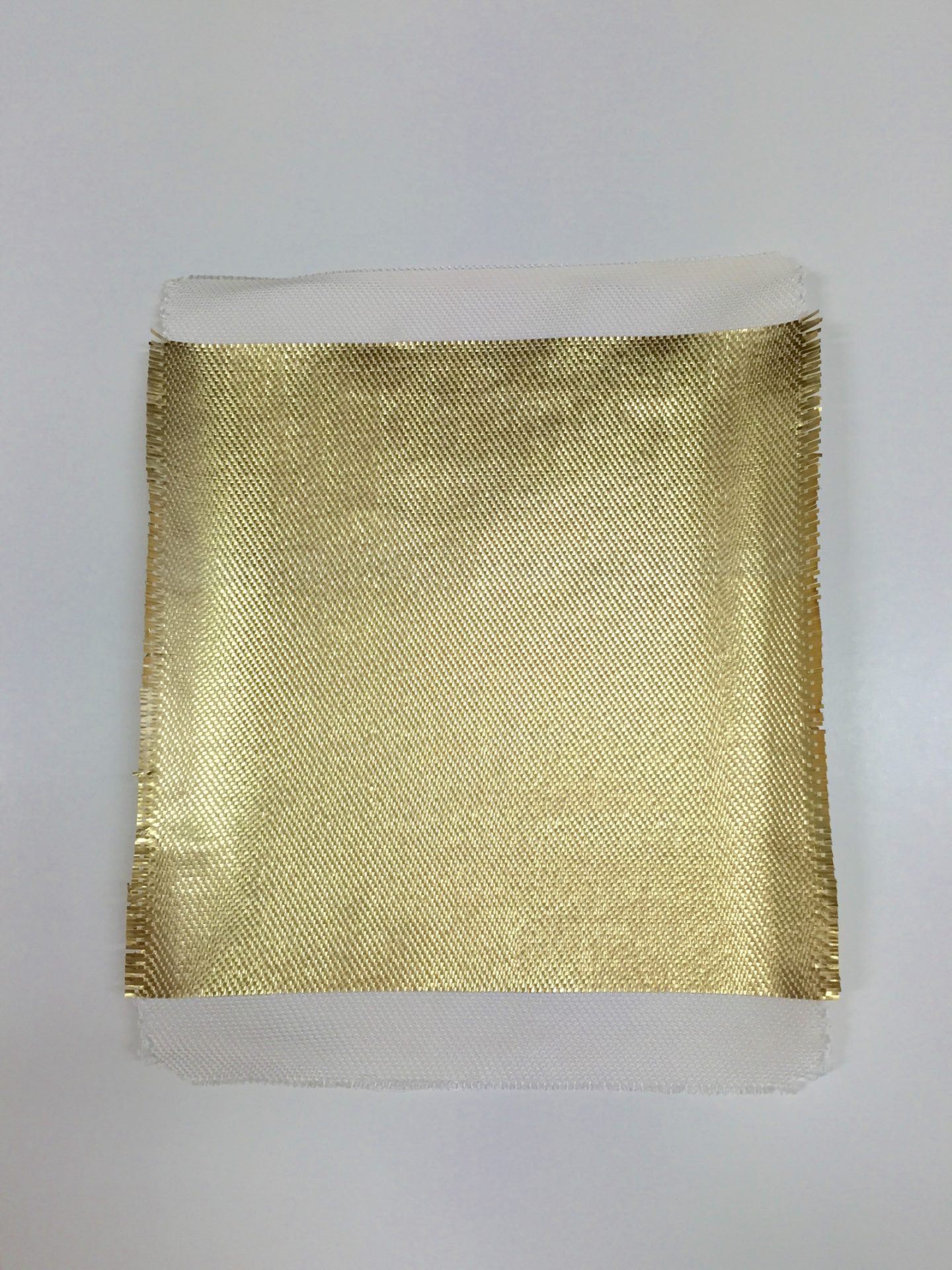
Weave a gold leaf piece (20cm x 20cm)
which you may take home with you.
Fee: ¥6,000 + entrance fee
Minimum height requirement of participants: approx. 130cm
Maximum 1 participant per session
Session time: approx. 90 minutes (followed by 15 minutes preparation time by staff)
Hands-on Accessories Weaving Session
Choose one type of accessory: ex. earrings, pierced earrings, brooches, macaroon straps, hair ties (one of two types) tie pin; choose one weaving style
Workshop fee: ¥3,500 (including studio visit)
Maximum 10 participants per session
Time required: Approx. 40 minutes
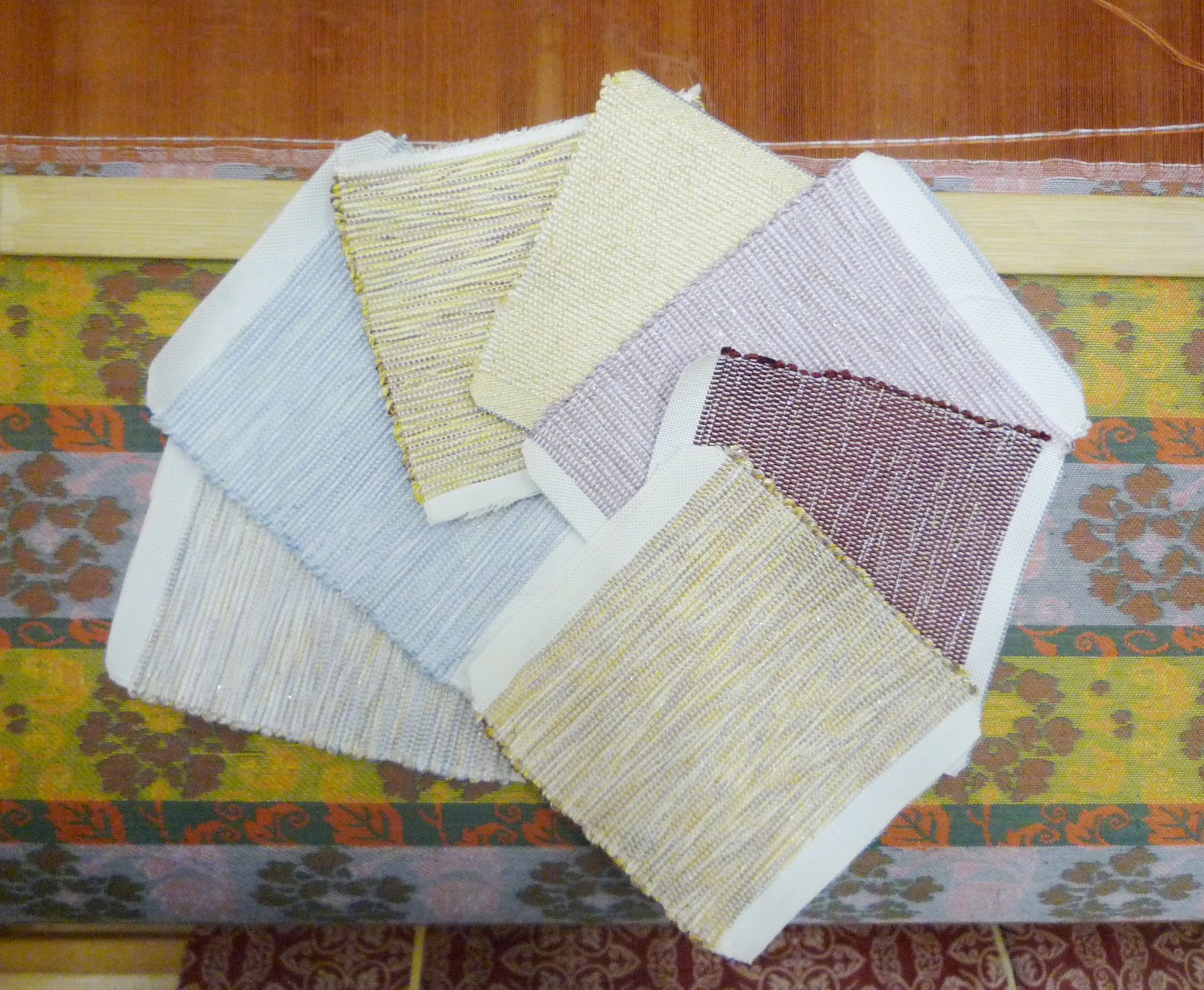
You choose one pattern from among the textiles we prepared and you make accessories.
You can not weave.
INFORMATION
・ Workshop fees – cash only; boutique sales – either cash or credit card
・ Please remove shoes for most rooms in tour
・ Food and drinks are prohibited inside
・ One single restroom available
・ Building contains two flights of stairs
・ Chair seating is available
RESERVATIONS
・ Required for any of the following: site tour, hands-on weaving session, boutique visit
・ Make reservation requests by 5:00pm on weekdays
・ e-mail: info@koho-nishiki.com
・ Provide your name, desired visit date and time, number of adults, children,
nature of visit (tour and/or type of hands-on session )
Address
KOHO TATSUMURA Co.,Ltd.
〒603-8107 京都市北区紫竹下ノ岸町25
25 shimonogishi-cho shichiku kitaku Kyoto,Japan 603-8107
[Tel]075-492-7275
[Fax]075-493-8806
[e-mail] info@koho-nishiki.com
By Kyoto Municipal Subway Karasuma Line
〇Get off at Kitaoji Station, and board bus #37 (bound for Nishigamo Shako), getting off at Shimogishicho.
〇Get off at Kitayama Station, and board bus #4 (bound for Kamigamo Shrine), getting off at Shimogishicho.
By Bus from Kyoto Station
take bus #9 (express bus #9 bound for Nishigamo Shako) getting off at Shimogishicho.
We are located 1 minute walk from Shimogishicho bus stop.
By car
We provide dedicated parking spaces for guests. Please call in advance to reserve your parking space.


電話をかける
公式サイト
通販
見学・体験